Tablut
Tablut is a 2-player, 15-minute Nordic board game that Linnaeus recorded in Lapland in 1732. One side gets the king to the edge; the other traps him between two soldiers. Free in your browser.
Play over time
Tablut in 30 seconds
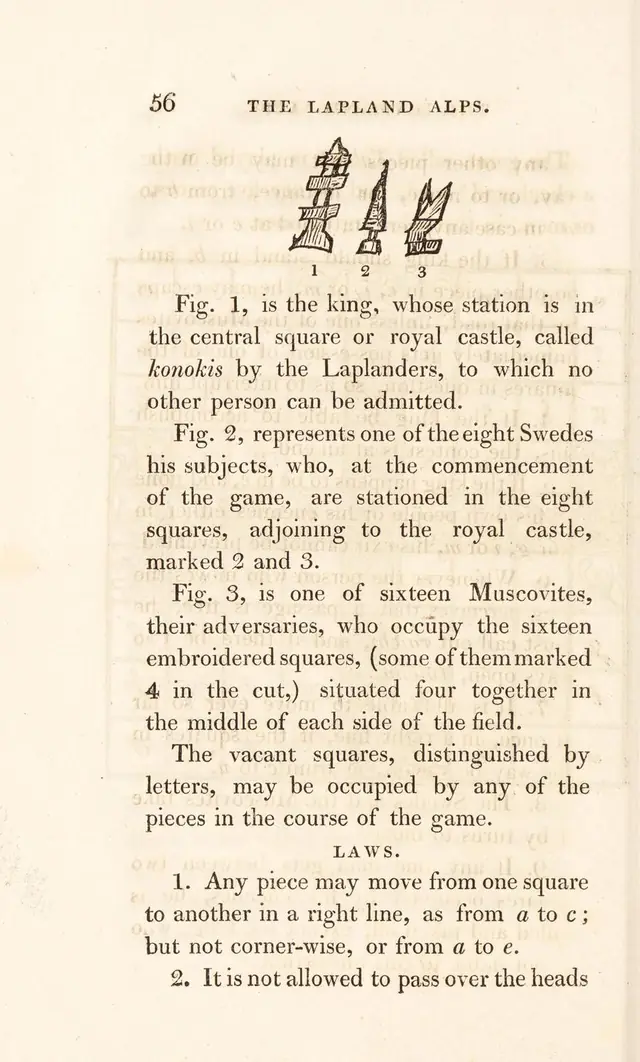
- Set upKing on the central throne, 8 Swedes around him, 16 Muscovites at the middle of the four sides.
- Take turnsThe Muscovites start. Move one piece any distance up, down, left or right.
- CaptureYour move captures an enemy piece between two of yours in a row or column. The king needs 4 sides on the throne, 3 plus the throne next to it, and 2 or 4 elsewhere, depending on the setting.
- WinSwedes: king reaches the edge. Muscovites: capture the king.
At a glance
| Item | This game |
|---|---|
| Players | 2 players |
| Play time | About 15 min |
| Type | Board |
| Ranked play | No |
| Practice against the CPU | Yes |
| Price | Free (no account needed) |
| Rights holder | A public-domain classic game |
| Last updated | 2026-09-25 |
How to play Tablut online with friends
- Tap "Play with friends"A party is created with a 6-character code. No account is needed.
- Send a link or QR codeShare it on LINE, or just read the code aloud.
- Everyone opens it in a browserOnce 2 players have joined, the host taps "Start".
Rule highlights
Setup, play, winning, and house rules
Setup
- Two players. Playing alone, you face the CPU.
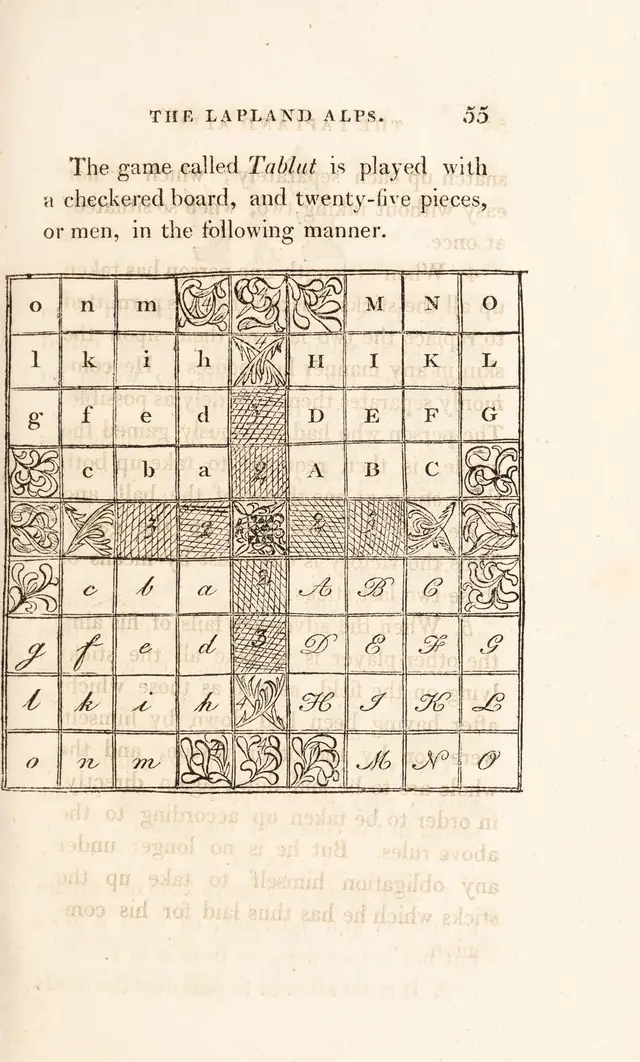
- The board is 9×9. The central square is the throne, where the king starts.
- The Swedes have the king and 8 soldiers, two on each side of the throne.
- The Muscovites have 16 soldiers, four in a T at the middle of each side of the board.
- The Muscovites move first. Play again swaps the sides.
How to play
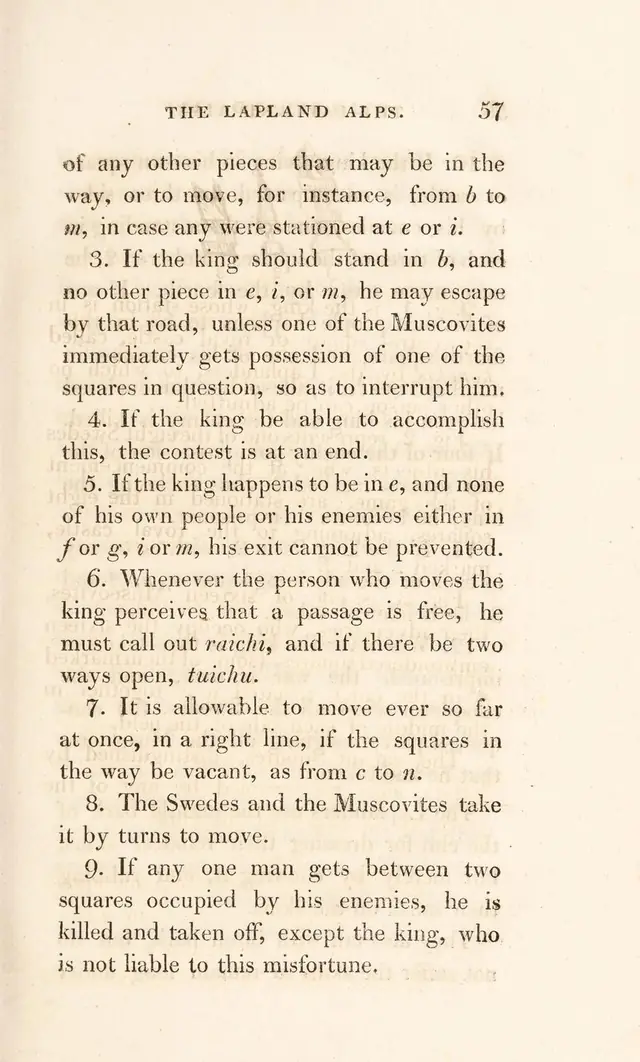
- Players alternate, moving one piece per turn. Any piece moves any number of empty squares up, down, left or right — never diagonally, never jumping.
- Only the king may stop on the throne. When it is empty, any piece may pass over it (but not stop there).
- Trap an enemy soldier between the piece you just moved and another of your pieces, in a row or column, to capture it. One move can capture more than one. The king can help trap.
- A piece that moves between two enemies of its own accord is safe. Only the side that moves captures.
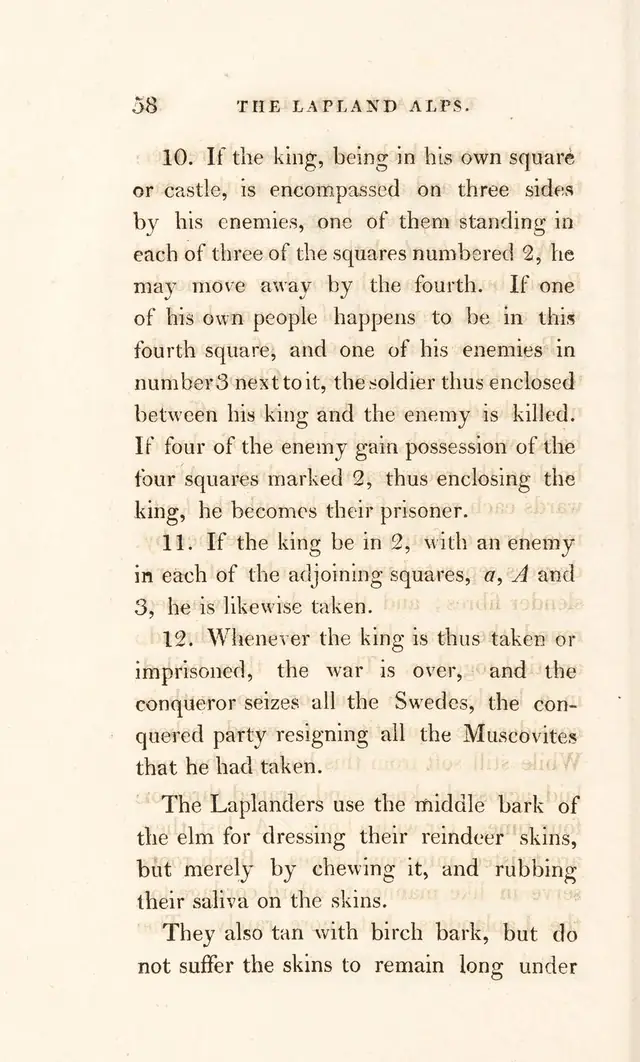
- When the king on the throne is surrounded on three sides and one of his soldiers stands on the fourth, that soldier is captured when an enemy arrives on its far side (Linnaeus's law 10).
- When one clear road runs from the king to the edge the board shows "raichi"; two roads show "tuichu" (Linnaeus's law 6).
Winning
- The Swedes win when the king reaches any edge square — any square on the edge, not only a corner.
- The Muscovites win by capturing the king: on the throne he must be surrounded on all four sides, and next to it on the other three.
- Anywhere else, by default (the Latin reading) the king is captured like a soldier, between two enemies in a row or column. With the English reading he must be surrounded on all four sides.
- Like a soldier, the king is not captured by walking into a trap himself.
- A side with no legal move loses. You can also resign.
- The game is drawn when the same position appears three times, or after 200 moves in total.
House rules
| Name | Description | Default | Changeable |
|---|---|---|---|
| Swap sides on Play again | Play again swaps the Muscovites and the Swedes. | On | Adjustable |
| Capturing the king | "Latin reading" follows Linnaeus's Latin original: away from the throne and its four neighbours, the king is captured between two enemies in a row or column. "English reading" follows law 9 of the 1811 translation: the king must always be surrounded on four sides, which favours the Swedes heavily. As a guide (200 games, CPU Normal vs CPU Normal): Latin reading — Muscovites 20%, Swedes 58%, draws 23%, 44 moves on average; English reading — Muscovites 1%, Swedes 68%, draws 32%, 34 moves on average. | Latin reading | Adjustable |
Recommendations
Play this game once to write one.
Send feedback or a bug about this game
Request a setting for this game
We publish the feedback you send and what we do about it here
FAQ
What is Tablut and where is it from?
It is a board game of the Sámi people, written down by the Swedish botanist Carl Linnaeus in the diary of his 1732 journey through Lapland. It belongs to the Nordic tafl family, where one side escorts a king and the other hunts him, and it is one of the few tafl games whose rules were recorded.
What is the source?
Linnaeus's diary, Lachesis Lapponica, or a Tour in Lapland, 1811 English translation, volume II, pages 55–58. Scans of the original are published by the Wellcome Collection (Public Domain Mark). The board diagram and laws 1–12 were read from them.
How many players?
Two. Playing alone, you face the CPU.
Who moves first?
The Muscovites. The diary does not say, and since the king's side has the advantage, the surrounding side starts. Play again swaps the sides.
Can I play on a phone?
Yes. No app is needed — just open it in a browser. You can join the same party as people on a PC or tablet.
Can two people play?
Yes. This game supports 2 or more players.
Can we play without being online at the same time?
Yes. Choose “Turn-based (told each turn)” and you can make one move whenever you like. We tell you when it is your turn. A table ends automatically, with no winner or loser, after 45 days without a move.
Rights holder and physical edition
This is a public-domain classic game. The rules follow the board diagram and laws 1–12 in Linnaeus's diary (1811 English translation), with assumptions where it is silent.
Related games
Same type (Board)
Same player count
Last updated 2026-09-25 · Run by Qdan, Inc.